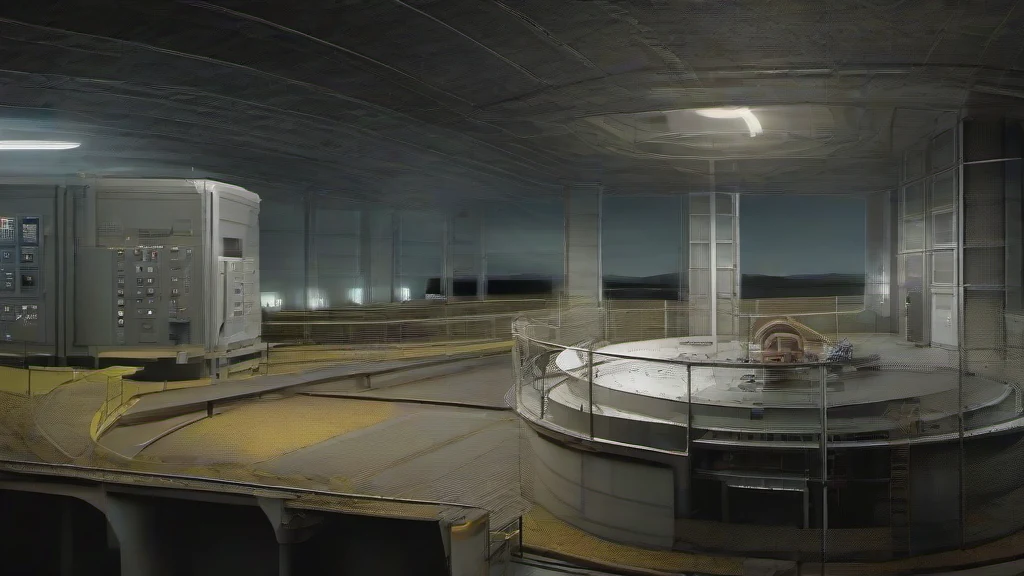
Finland has granted an operating licence for Onkalo, its deep underground repository for spent nuclear fuel. Work on the facility at Olkiluoto, in the country’s southwest, began in 2004. The first deliveries are expected in the coming months, according to the source account.
Onkalo is designed to contain nuclear waste for periods far longer than recorded human history. Some repositories may need to remain intact for at least 100,000 years, and potentially as long as a million years. The challenge is especially acute for spent fuel and reactor shielding materials: iodine-129, for example, has a half-life of nearly 16 million years.
The repository’s design combines natural geology with several engineered barriers. Tunnels run through carefully mapped areas of dense, low-permeability gneiss, avoiding fractured rock. Spent fuel is placed in a cast-iron insert inside a copper container with walls five centimetres thick. The container is lowered into a borehole and surrounded by compacted bentonite clay, which swells when wet, helping to block water and cushion movement in the rock.
Once the facility is full, the tunnels will be filled with bentonite and sealed. The site was beneath a thick ice sheet around 20,000 years ago and could be glaciated again. The ground can also shift as ice retreats, potentially creating fractures, although the source says these risks have been substantially reassessed.
Other countries are pursuing different approaches. Sweden has begun work at Forsmark using a similar copper, bentonite and rock system, with operations planned for the 2030s. Canada has comparable proposals, while the UK is still considering two possible sites in clay formations in northwest England, near Sellafield.
France’s Cigéo project, planned for the 2050s, is being designed so waste could be brought back to the surface if necessary. That reflects a different view of long-term storage: around 97% of spent fuel is recyclable, and future technology could offer further options.
The history of Germany’s Asse II mine illustrates the risks of underground storage. More than 125,000 drums of low- and intermediate-level waste were placed there from 1967. Salt was chosen because it was thought to be impermeable and capable of closing cracks, but saltwater was found entering the mine in 1988. Germany now faces the task of retrieving about 47,000 cubic metres of waste.
A further challenge is preserving knowledge of repositories for future generations. Proposals have included physical warning markers, durable records and passing information through education. Finland’s approach at Onkalo, by contrast, was to select a location with few resources that might attract future excavation, with the aim of sealing the repository and leaving it undisturbed.
Sources: Focus.it.